Sunday, September 01, 2013

When Patients Don't Pay


Before we start, some housekeeping issues:

First, I want to say that I was misled.  I was told that gazpacho freezes well, and following such advice, I can say with impunity that fresh gazpacho is far better than defrosted gazpacho.

Second, I want to say that when I deactived my personal Facebook account, I lost access to the ShrinkRapBook Facebook account where I post new Shrink Rap articles and other links to Shrinky Things of Interest.  Instead, please follow us on Twitter: ShrinkRapDinah, ShrinkRapRoy, and ClinkShrink.  I'm slowly transferring my social media addiction.  

Third, ClinkShrink and I will be doing the kickoff lecture for the Hopkins Odyssey Mini-Med School Series on the evening of September 12th.  There is a reception, followed by our talk where apparently we will be teaching everything you want to know about psychiatry in one hour, with time for questions.  While I speak, Clink will be fashioning the shingles in the back of the room, so you'll be ready to hang them soon after.  While Clink talks, I'll be distributing the new Psychiatrist shingles.  It should be a fun evening, so if you're in town, do register.  

------------


Now for the post.   Before I start rambling, let me say that it's rare that patients don't pay.  It happens in every business, and some people are more aggressive about being sure they are paid, but I am not.  I ask for payment at the time of service before the first session, and maybe half of people pay at each visit.  If someone doesn't pay, at the end of the month, I send a statement.  The large majority of people then send a check.  Some don't, and the following month, I send another statement.  Some people let them build up and send payment irregularly, but most people stay up to date, and nearly everyone pays at some point.  Since I'm not living on a pay-check to pay-check basis, it doesn't bother me if someone waits a bit -- perhaps they're waiting for the insurance to reimburse them to have the cash available, or perhaps they are lazy about bills, but I'm not a stickler for this, I hate nagging people about payment because I don't want them to feel like all I care about is the money (and that is what people think) and that I don't care about them.  Talking about money is the hardest part of psychiatric practice, especially if I'm the one to bring it up and not the patient.  Much harder than  talking about sex or suicide, or the routine stuff of psychiatric sessions.

So I'm not a stickler for being paid at a precise time, and I would never send a patient away who forgot their checkbook (in some practices: No payment, No treatment) and for the most part, it's not a problem, most people pay, if not now, then later.

But this is a post because sometimes people don't pay.  Sometimes  keep coming and building up a balance, and acknowledge this and say they intend to pay.  Sometimes they disappear with an unpaid balance, never to be seen again, or later they want to return and send in the check for the unpaid balance before calling for another appointment.  But every few years there is someone who just doesn't pay, doesn't address it, and continues to request services, emergency care, repeat requests for medications to be called in, or duplicate statements to be sent for insurance reimbursement (which does not turn in to payment for the doctor).  Rare-- I could probably count on my fingers how many times this has happened in 20 years, but still, I find it troubling on several levels:
-- I feel I can't turn someone away if they are in distress.  Actually, I'm not much for turning anyone away once they are an established patient.  As one psychiatrist told me, "Once a patient, always a patient."  Forget 'in distress.'  If someone requests an appointment, I'm not good at saying, Hey you owe me big bucks, what's the deal?
-- If the patient is submitting to insurance and then not paying me, this is insurance fraud. They are turning a profit on coming to treatment.  Even if the money is going to pay their mortgage, it still feels wrong.
-- At some level, the issue starts to impact care: there is a large unpaid, unaddressed bill, and then a call with a crisis on a weekend.  To me, it never feels right to say "I'm sorry you're suicidal, but you know you last paid me 6 months ago."  I deal with the crisis, but I'm not happy about it.
-- I'm not in insurance networks, so people have the option of getting less expensive care by going in-network; I'm no one's only option for treatment.

So what is reasonable?  I don't want to say to people, if you haven't paid by the 15th of the month, then I won't see you until you pay up.  Some people pay irregularly, but I've seen them for years and I know they will pay and there is no issue.  Others, I just don't know.  And sometimes I will agree to a reduced fee for someone in a rough place who has been in treatment with me for a time, but ironically, these are the people who are most likely not to pay. I suppose they figure that if I can afford to discount the fee, I must be rolling in the bucks.  Which then might beg the question, should a wealthy physician who doesn't need the money to survive because he inherited a trust fund from grandpa be charging people with financial problems for necessary medical or surgical care?  Well of course, his time/training/expertise have value, but patients sometime resent paying rich doctors.  (P.S. I didn't inherit a trust fund, but I wish I did, and I'm still open to being a beneficiary). 

What's your experience been?  Psychiatrists: what rules do you have for collecting payment: Pay at the door? Pay when you get your bill? And when do you start saying you won't schedule another appointment -- when a bill is unpaid for one session? One month? 90 days?  Six months?  What overdue balance can you live with and not feel taken advantage of?  $100?  $500? $1,000? $1,500?  If someone is in a regular on-going psychotherapy, it's not hard to get to those numbers.  Patients/Clients/"Consumers": How does your shrink deal with this? 

Thursday, August 29, 2013

For the Rest of Your Life -- Or Perhaps Not


Over on 1 boring old man (who actually is not all that boring), Mickey is writing about a post of Thomas Insel's blog yesterday --  Insel writes about how some patients do better without long-term anti-psychotic treatment.  Dr. Insel is the Director of the National Institute of Mental Health.  

So perhaps you've heard that people with certain mental disorders need to stay on their medications forever.  Certainly, some do -- they stop their medicines and each time they try that experiment they end up sick --- in the hospital, in jail, on the street, or simply festering in the basement.  But some people stop their medicines and they don't get sick, so clearly, not everyone with a given diagnosis must stay on medicines for life, but we don't have a way of knowing who needs them and who doesn't.  We know risks for populations (maybe, to read Dr. Insel's blog, we don't know them as well as we thought), yet we know nothing about a given individual until a doc stops the meds or the patient goes off them on their own.  We also know that the medicines have risks.  How much risk?  Who knows.  Here, one figure sticks: of those who remain on an older generation antipsychotic (Haldol, thorazine, prolixin) for 25 years, 68% will get tardive dyskinesia.  And that figure doesn't say anything about dose.

So read Dr. Insel's post: Antipsychotics: Taking the Long View.
And read 1 boring old man's post: surprise...

And I'll copy a part of Dr. Insel's post here:

After six months of symptomatic remission following antipsychotic treatment, patients were randomly assigned to either maintenance antipsychotic treatment or a tapering-off and discontinuation of the drug. As expected, the group that stopped taking their medications experienced twice the relapse rates in the early phase of the follow-up. But these rates evened out after a few years, as some patients in the maintenance group also stopped taking their medication. Most important, by seven years, the discontinuation group had achieved twice the functional recovery rate: 40.4 percent vs. only 17.6 percent among the medication maintenance group. To be clear, this study started with patients in remission and only 17 of the 103 patients—21 percent of the discontinuation group and 11 percent of the maintenance group—were off medication entirely during the last two years of follow-up. An equal number were taking very low doses of medication—meaning that roughly one-third of all study patients were eventually taking little or no medication.
For me, there were three remarkable results in this study. First, the groups did not ultimately differ in their experience of symptoms: about two-thirds of each group reported significant improvement in symptoms at seven years. Second, 29 percent of the discontinuation group reported that they had also achieved a healthy outcome in work and family life—a number that should give hope to those struggling with serious mental illness. And finally, antipsychotic medication, which seemed so important in the early phase of psychosis, appeared to worsen prospects for recovery over the long-term. Or, as Patrick McGorry said in an accompanying editorial, “less is more.”2 At least for these patients, tapering off medication early seemed to be associated with better long-term outcomes.

Thursday, August 22, 2013

Facebook No More (At Least for Now)


It hasn't been the easiest of summers for me.  As I've mentioned before, my brother died unexpectedly. And then last week, a neighbor's house burned down in the most dramatic of ways.  Watch those candles, folks.  Who would think that a citronella candle outside could burn down an entire house in minutes?  The people all got out, and the firefighters were spectacular.  But it's all a reminder of how fragile life is, and how it takes but a moment for one's whole world to change.  I go through life feeling very blessed, and losing my brother put a kink in that whole concept.

Last month, in the middle of a sleepless night, I had a temper tantrum and said something I would not normally say on Facebook.  Then, I shut down my account.  I've been asked why I did that, and even to me, it doesn't really make sense.  I was momentarily annoyed and it wasn't well thought out.  

The truth is, I'm addicted to e-mail, and I was addicted to Facebook.  I'd checked it and then I'd check it again.  I like being connected with people, I like being in the know, I like looking at pictures of everyone's kids, and I like getting news from my favorite media sources and from news reporters I follow.  Since Facebook, I'm much aware of  current events.

Suddenly, I was Facebook-free.  Cold turkey, I surrendered.  I figured I would re-open the account at some point, and I'm sure I will, someday.  But what I discovered when I shut down the account was that life got different, in a better way.  I hadn't realized it, but every time one of my kids said something funny, or I went somewhere interesting, or something extraordinary happened or caught my attention, I was posting a status update, a link, a photo.  I was living my life for Facebook.  Now I can be in the moment without having to get the perfect picture, without wondering if I should post that quote or not.   Events don't have to be chronicled for others, they can be experienced for their own merit.  I'm not constantly assessing what picture to take and then to post.  Maybe it's because it's August and life always slows down in August, but I've felt my tension level drop and I think it's the relief of one less thing to attend to. 

So there things I miss.  I miss hearing how my sister-in-law is doing several times a day (we now resort to email), I miss knowing what's going on in the world (sort of, a little) and my account is linked to the Shrink Rap Facebook page, so I can't update that with relevant links.  Roy can still access it, but somehow it's always been my job.  I'm still tweeting; for some reason, that doesn't have the addiction issue, perhaps because I don't actually know any of my twitter followers.  I've always been a Facebook fan, and I've encouraged friends to join, but suddenly, I'm not such a fan.

---------

On another note, I wrote about addressing the concerns of the Anti-Psychiatry crew over on Clinical Psychiatry News.  Here's the link. 

Tuesday, August 20, 2013

Why Are Inmates Dying?


In yesterday's New York Times there was a story by Erin Banco called Suicides Worry Experts at Big Jail in Capital. The story talks about four deaths at the DC jail this year and the general worrying trend of increasing correctional suicides nationally. The article speculates that the deaths may be attributed to lack of adequate mental health staffing or deficiencies in the jails' observation practices. Some of the people interviewed for the story linked the deaths to cutbacks in state mental health budgets.

Correctional suicide is an area that, as Dinah would put it, is a "Clink" thing---a topic I've been interested in for a number of years. I wrote about this three years ago in an article called Correctional Suicide: Has Progress Ended? In my article I pointed out that nationally we seemed to have hit a "floor" with regard to suicide prevention---rates had been declining consistently over the years until a recent plateau. I wrote about what I thought might be the cause of that plateau: the Prison Litigation Reform Act which limited prisoner access to the courts and circumscribed how far courts could intervene to improve prison and jail conditions,  as well as changes in the profile of the typical correctional suicide, and the increasing problem of gang violence and intimidation in corrections.

What was most striking for me then was the fact that correctional suicide studies are starting to show increasing numbers of inmates who die from suicide without any previous mental health history or history of suicide attempts. I coined the term for this phenomenon a "clean" suicide---one that could not have been picked up or prevented through currently accepted screening methods and referral protocols. The New York Times article didn't address this, but I couldn't help wondering if the deaths in the DC jail might fall into this category.

What I didn't mention in my earlier paper---because the numbers weren't out yet---was that the increase in jail and prison deaths may reflect a larger trend in rising national suicides. According to the CDC, the age-adjusted death rate for suicide has increased by 8.7 percent since 2000. The other new data comes from the recent Department of Justice report on inmate sexual victimization and abuse. According to this national survey, being a sex offender increases the by other inmates. The Washington Post has reported that three of the four DC jail deaths were by detainees who were charged with sex offenses.

The Times may be correct that cutbacks in state mental health budgets have had an effect, but this does not address the fact that for many states the funding for correctional health care comes out of the public safety budget rather than the health and mental hygiene budget. State cutbacks could still play a role, just not through the route the article suggests. States with privitized correctional health budgets would also have to be examined separately to look for contractual budget changes.

So those are my thoughts about the NYT correctional suicide story. I figured I'd better get this post up fast before Dinah nudges me to write about it. (Yeah I know, I'm supposed to be re-reading the book proposal but Dinah you know I had to blog about this.)

Monday, August 19, 2013

EMR's : Good or Bad

Over on GregSmithMD, Dr. Smith talks about the downside of Electronic Medical Records: Thing one: they distract the doctor, Thing Two: They take a lot of time and decrease free/casual/down/recharging time for docs, Thing Three: Some older wiser therapists opted out and retired, taking their talents and the institutional memory with them.  Dr. Smith also points out that it helps to have legible notes.

As I've mentioned, I left my job at the clinic where I've worked one morning a week for the past 15 years because I couldn't deal with learning the new EMR, see My Epic Meltdown. 

So never mind the fact that EMR's require that doctors collect all sorts of information with each visit which may or may not be relevant to the patient's care.  Treatment becomes a checkbox from a drop down list.  The screen sucks time and attention.  But I have a different concern.  When I go to a doctor, I ask for a copy of the consultation note.  I keep copies of my labs, copies of notes from any specialist I see, results of any test I have.  I've been struck by how these notes contain gross examples of inaccurate information.  So far, nothing I've seen has been scary, but there's the documentation that my liver and spleen are normal in size by the doctor who didn't check (maybe X-Ray vision was involved).  And I really like how I'm "currently married."  Does that imply that it's a temporary state?  I've been with the same guy since I was 18, at this point I'm thinking it may last for a bit. Okay, I'm nitpicking. None of this matters, and I avoid docs with electronic records, so mistakes hopefully don't get transmitted.

Here's my question about Electronic Records:
~ Don't they risk that misinformation will be perpetuated?  Isn't this dangerous?  Shouldn't patients review the records to be sure they are correct?  Why aren't we more worried about this?
~Don't they increase the physician liability?  If a doctor writes something in the record, even a note from a phone call, and this contains important information, and these charts quickly get full of information because every phone call, every visit with every healthcare professional (including phone calls requesting refills taken by a nurse) is a separate note, isn't each physician responsible for knowing what's in all these now-legible notes, and if something gets buried in one of many notes and the physician misses something important, isn't it now an issue?  Patient calls and notes they developed a rash with a medicine.  Doctor puts it in a phone note, but doesn't record it in the allergy section and forgets at the next visit.  Patient later has a bad reaction when given that same medication a few years later.  

Okay, so what have your experiences been to date with EMRs?  Good, bad, happy, sad?


Friday, August 16, 2013

Is the Government Getting in the Way of Treating Those With Severe Mental Illness?


So Twitter led me to Pete Earley's blog this morning, and that led me to The National Review for an article by E. Fuller Torrey and D. J. Jaffe -- see : After Newtown; The existing federal mental-health agency actually opposes efforts to treat mental illness.

To quote part of the article (surf over there for the whole thing), and note that SAMHSA is the government's Substance Abuse and Mental Health Service Administration:
What is severe mental illness? According to the National Advisory Mental Health Council, in response to an inquiry from Congress, severe mental illness includes schizophrenia, schizoaffective disorder, bipolar disorder, autism, and severe forms of depression, panic disorder, and obsessive-compulsive disorder. One measure of SAMHSA’s lack of interest in these disorders is its current three-year planning document, “Leading Change: A Plan for SAMHSA’s Roles and Actions 2011–2014.” Despite being 41,804 words in length and acknowledging that 9.8 million Americans are afflicted with what it refers to as “serious mental illness,” the SAMHSA plan includes not a single mention of schizophrenia, schizoaffective disorder, bipolar disorder, autism, or obsessive-compulsive disorder.
So, when it was asked to provide direction for the Biden Task Force, SAMHSA had nothing relevant to offer. It invited Daniel Fisher to provide testimony as a psychiatric expert. Fisher, director of the National Empowerment Center in Massachusetts, to which SAMHSA has given $330,000 a year for many years, has publicly stated that what is called severe mental illness is really just “severe emotional distress” and “a spiritual experience.” He also believes that “the covert mission of the mental health system . . . is social control.” Fisher’s former deputy similarly asserted that “mental illness is a coping mechanism, not a disease.”
Such views are consistent with views expressed by many invitees at SAMHSA’s annual conference. In 1995, for example, one speaker claimed that “schizophrenia is a healthy, valid, desirable condition — not a disorder . . . what is called schizophrenia in young people appears to be a healthy transformational process that should be facilitated instead of treated.” Similarly, in 2010, another speaker extolled mental illnesses as “extreme states of consciousness that are mad gifts to be nurtured and cultivated,” and he advised people with mental illnesses to stop taking their medication.
That the federal agency charged with reducing the impact of mental illness on America’s communities is sponsoring forums at which severe mental illness is extolled as a good thing has overtones of Lewis Carroll. But the situation is even more bizarre than that. SAMHSA’s only recommended “treatment” for all mental illnesses is the “recovery model” — in other words, everyone should simply recover. This is similar to the Caucus race in Alice in Wonderland in which the Dodo declares that “everybody has won, and all must have prizes.” The “recovery model” was officially defined by SAMHSA in 2004 as including ten “fundamental components,” the most important being that it is “self-directed by the individual, who defines his or her own life goals and designs a unique path towards those goals.” The “recovery model” includes no mention of the need for medication or other specific treatments. It makes no allowance for the fact that many individuals with severe mental illness are unaware of their own illness. This is an ideology, not a treatment. Under the “recovery model,” John Hinckley was defining his own life goal — the attention of Jodie Foster — when he shot President Reagan. Similarly, Cho, Loughner, Holmes, and Lanza were presumably attempting to define and achieve their life goals, too. Their actions would meet SAMHSA’s definition of “recovery.”

Wednesday, August 14, 2013

Are Too Many Anti-Depressants Being Prescribed?


Look, our friend Dr. Mojtabai and his study on the use of antidepressants is on the Well Blog in the New York Times!  See a Glut of Antidepressants by Roni Caryn Rabin.  Oh, and do read all 405 comments.  

The study looks at patients diagnosed with depression in primary care setting, and many given that diagnosis do not meet criteria for the disorder, but still get prescribed anti-depressants.  I wondered if some didn't meet criteria for depression because the anti-depressants were doing a good job of treating the symptoms.  Unfortunately, I could find the abstract for the original article, so I will refrain from commenting on it further.  

Ms. Rabin writes: 

The vast majority of individuals diagnosed with depression, rightly or wrongly, were given medication, said the paper’s lead author, Dr. Ramin Mojtabai, an associate professor at the Johns Hopkins Bloomberg School of Public Health.
Most people stay on the drugs, which can have a variety of side effects, for at least two years. Some take them for a decade or more.
“It’s not only that physicians are prescribing more, the population is demanding more,” Dr. Mojtabai said. “Feelings of sadness, the stresses of daily life and relationship problems can all cause feelings of upset or sadness that may be passing and not last long. But Americans have become more and more willing to use medication to address them.”
So let me ask you: is this a bad thing?  We're not talking about forced medication here, or prescribing addictive medications, so if a patient comes and says they feel depressed and they want medication, and they don't "meet criteria" for the disorder, but they insist they are suffering and depressed and are willing to accept the risk of side effects, it's it awful if a doctor gives them a prescription for the medication?  "I'm sorry Mrs. Jones, but your extreme sadness and suicidal ideation are only two symptoms and you need more, are you really sure you're sleeping okay?  You don't have major depression so no prescription and you'll be fine after some yoga."  Or maybe the patient tells the primary care doctor that they're depressed, but they don't have enough symptoms to meet criteria, but in fact they do meet criteria for a diagnosis of dysthymia (chronic, low grade depression), or for an anxiety disorder which might also be helped by an anti-depressant.  On the other hand, should we really have the expectation that everyone's mood will be good/fine/okay all the time?  Yes, the drug companies make money off this, but generic Prozac and Paxil cost about $40/year to be on, and one might hope that if they weren't helping, they'd be discontinued. 

And remember, Dr. Mojtabai's study was done with data from primary care settings, it's not about psychiatrists who are more accurate with psychiatric diagnosis than primary care docs.


Saturday, August 10, 2013

Back from Vacation: Roundup of Psychiatry in the New York Times

It's August, and  I've been away.  Now I'm back.  While I was gone, there were a number of articles in the New York Times that were Shrink Rap material.  Here is a list, with thanks to Jesse for keeping me informed:

Mark Epstein on The Trauma of Being Alive.  It's a nice piece about how people deal with loss, and it's feeling a little to relevant these days. 

Here are the response letters to the article. 

 I didn't see Epstein's article as a deterrent to getting care, as one trauma therapist who responded did, but rather as a suggestion that we take grief as it comes, however it comes, with no comment on what more to do about besides accept and "lean into" the emotions (whatever that may mean).  I figured that if one's response to the distress of a loss was to want to seek help, then the author,  a psychiatrist, probably wouldn't be blocking the door.   

Pam Bellack wrote on the successes of forced outpatient care in Programs Compelling Outpatient Treatment for Mental illness is Working, Study Says.

In a response letter, three professors wrote about Forced Drug Treatment.

Don't hold your breath waiting for the Shrink Rapper book on this -- it will be years in the coming.

In Lawyers of Sound Mind, Melody Moezzi writes about the hassles newly minted lawyers have to go through in some states to enter the Bar if they've been treated for psychiatric disorders. 

In When Doctors Discriminate, Juliann Garey writes about her experiences with doctors who've dismissed her health problems after learning she takes psychotropic medications.

And in New Sign of Stimulants' Toll on the Young, Sabrina Tavernese discusses the increased rate of ER visits for stimulant-related problems, especially for those who obtain them without a prescription and for those who combine stimulants with alcohol. 

And over on Clinical Psychiatry News, ClinkShrink chides the president of APA for irresponsible tweeting.  


Friday, July 26, 2013

Guest Blogger Simple Citizen on The Suicidal Patient's Right to Have Advance Directives Honored

Simple Citizen is a psychiatrist reader with his own blog (see our sidebar).  This started as a comment, but I asked to use it as a stand-alone post.  Dr. Citizen writes:
 

We have the right to die, but not the right to commit suicide.

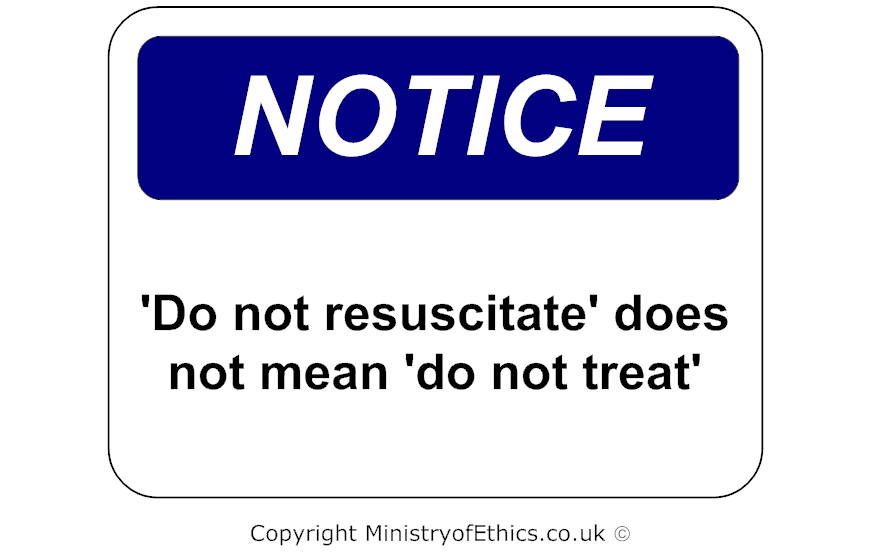
This makes my life in Consult Psychiatry extremely difficult, especially when someone has an Advance Directive that states "Do-Not-Resusciate" and then they try to kill themselves.

They arrive at the hospital in critical condition, the medical team knows the need to be intubated and they are likely going to go into cardiac arrest. Should they intubate them and save them because suicide is illegal, and the person may want to live when they are not in crisis? Or do the doctor's let the patient die because of the patient's pre-written wishes?

Worse yet - what if the person didn't have an advance directive, but when they are crashing in the hospital, they tell the whole medical team that they refuse CPR and intubation. Does a person who just attempted suicide have the capacity to make that decision?

More of my thoughts here if you're interested:
http://thoughtsofasimplecitizen.blogspot.com/2012/03/right-to-die-v-right-to-prevent-suicide.html

---------------------

So here's my question: okay, it's one thing if someone checks into a hotel room, makes a serious attempt, notifies no one, has an Advance Directive in their hand and a DNR order tattoo'd on their forehead, but oops, the maid finds them.   That's it's own touchy issue -- unless you're their wife or mother or son, in which case I don't think it's a question at all.  But what do we do about the patient who overdoses, then emerges from the bathroom to tell their significant other "I just took all my pills".  Or the person who makes an attempt then dials 911 or goes to the ER.  How do you stand there and let someone die because they have a piece of paper saying they don't want CPR or intubation?  Is it really reasonable to have this type of attempt and announce it?  Isn't there an element of cruelty to it?  So many people attempt suicide and wake up glad to be alive.

I'm going to add that I don't believe Advance Directives made by people without psychiatric disorders are binding if the patient does not have a terminal illness.  A healthy  person can't go into a routine appendectomy or tonsillectomy and say "if something goes wrong, you can't even attempt to resuscitate me."  No surgeon or anesthesiologist would ever accept that malpractice risk. --"I'm so sorry Mr. Smith, buy your 20 year old son had a tension pneumothorax during the procedure, and we could have intubated him and put in a chest tube, and he'd have spent a couple of the days in the ICU then made a full recovery, but he said no tubes/no intubation."  Advance Directives are meant for situations where someone has a terminal condition -- cancer or Alzheimer's Disease, or AIDS.  And what would we do about children?  Would we allow a parent to make a healthy child DNR in the event of treatable illness?

Monday, July 22, 2013

The Right To Die. Maybe. Sometimes. If You Don't Change Your Mind. Today.


Great article in the New York Times Magazine, called A Life-or-Death Decision, by Robin Maranz Henig, about an ethicist Peggy Battin, who teaches and writes on the right to self-determination and end of life decisions.  Her husband, also a college professor, suffered a severe head injury while bike riding, leaving him a wheel-chair bound, machine dependent quadriplegic, a year after he'd written a living will forbidding the use of "measures to unnaturally prolong or postpone the dying process."  In the years since the accident in 2008, her husband, Brooke Hopkins, has required around the clock care to maintain his breathing, a feeding tube, and an enormously expensive motorized wheelchair for mobility, and a quarter of a million dollars a year spent on 12 aides who help him around the clock.  He's been in and out of the hospital, and what's striking is that from the time Dr. Hopkins wrote his advance directive, he changed his mind.  Now the couple struggle with the dynamic that sometimes he says he wants to die, his wife ignores his requests because she believes he doesn't really mean it, and generally he later says that in fact, he's glad measures were taken that kept him alive.  Dr. Brooke is able to read with a voice-commanded computer screen and co-teaches a courses in his home.

I'm all in favor of advance directives and the right to die with dignity in a situation where healthcare prolongs the inevitable death.    This story, however, was extremely confusing.  One member of the couple is a bioethicist whose career has revolved around these issues.  The other is a gentleman with a head injury, an impaired lifestyle requiring extreme measures of support, a general (or so portrayed) happy and positive outlook who is still culling meaning from life and contributing to society, and yet, there is no absolute way he can say "enough" ( he tried in a Final Letter) because any such statements are felt to be transient, reflective of a momentary state of distress that will pass, and so in a Catch-22, it's not quite clear that he can ever practice what his wife teaches.

I will mention that the article had a single passing reference to the fact that Dr. Hopkins (Ph.D. from Harvard, athlete, risk taker, life of the party, and esteemed college professor) suffered from bipolar disorder, and aside from that single mention, it was never part of the discussion as to why he shouldn't call the shots on his life, have an advance directive, or called into question as a reason why he might be changing his mind about wanting to live or to die. Bipolar disorder got a mention, but it does not sound to be what defines Dr. Hopkins.

So what do you think?  How do we ever really know for sure what someone wants if they change their mind or waiver during moments of crisis?

Thursday, July 18, 2013

WSJ: Paul McHugh Derides DSM5 for Failure to Progress


Paul McHugh, MD, esteemed past Chair of Psychiatry at Johns Hopkins, writes in the criticism from Tom Insel from NIMH. Paul eloquently explained his point, which makes a lot of sense.
Wall Street Journal about how the new DSM fails to account for causes, similar to the

With its new manual, the APA might instead have started taking steps toward a system of classification that, as in medicine, organizes disorders according to what we know about their natures and causes. Such knowledge, rather than checklists of symptoms, would then direct treatment and research.

Psychiatrists know, for instance, that depression and anxiety can derive from a number of different sources: cerebral diseases such as schizophrenia and bipolar disorder; alcoholism or drug addiction; experiences of loss, deprivation or trauma; and, more generally, a vulnerable temperament, characterized by introversion, shyness and emotional intensity.

Deciding which of these sources, alone or in combination, applies to a particular patient requires hours of evaluation. Prescribing an appropriate treatment involves not checking symptoms but determining who the patient is and what he or she has experienced and done.

DSM-5 displays none of this thinking. It remains a field guide organized by symptoms, clustered in categories that can expand without limit. Official, APA-approved psychiatry seems to lack the will to change. It justifies its stagnation not only by reminding its members of the chaos of the 1970s but by claiming that the U.S. health system would not pay psychiatrists if they tried to know their patients the way that they could and should.

I have not seen the issue of DSM5 updates discussed in all the recent rancor. Some of you may know that the DSM5 is expected to have periodic updates, e.g., 5.1, 5.2, 5.3, etc., not unlike how Apple's OS X comes out with a new "point" version every year or two. I expect that, as delineated causes of different psychiatric disorders arise with new research, these will be added to future incremental updates. However, both Drs Insel and McHugh have valid criticisms that the new version, released today and already #12 on Amazon's bestseller list, missed an opportunity to reframe the organization of illnesses based on causes, not symptoms. We'll have to wait to see how the generated heat tempers the 5.1 version, mishegas notwithstanding.

Posted by Roy

Wednesday, July 17, 2013

Hunger Strikes, Coercision, and What's New in My Life


These days, ClinkShrink and I are talking about very different things over on Clinical Psychiatry News.

Clink is setting some guidelines for how one might go about determining if a prisoner has been coerced to go on a hunger strike.  You can read about that in Assessing Coercion Among Hunger Strikers: A Primer. 

For those of us who are a little less specialized, I wrote an article a few weeks ago about My Life/Your Life and self-disclosure by the therapist during tough times.  See The Delicate Balance of Self-Disclosure. 

And Roy is....where is Roy?  Has anyone seen Roy?  Clink, check under the floorboards....

Monday, July 15, 2013

Guest blogger Dr. Jesse Hellman and the Question of Whether Ralph Rackstraw was Certifiable

 
O wad some Power the giftie gie us
To see oursels as ithers see us!

These lines are from Scottish poet Robert Burns. He could well have added that we might have the gift to see better what others mean by their acts and words. Two sides of the same coin, perhaps, but very important in trying to understand the issues of involuntary hospitalization that are often discussed here. Yesterday Dinah and her husband joined me and my wife to see HMS Pinafore, and at intermission I commented to Dinah that in today’s culture one of those sisters, cousins or aunts might have called 911 when Ralph Rackstraw talked of suicide: he had the means, he expressed intent, and he believed Josephine did not love him. How differently the play would have gone if he had been quickly certified for observation in the local hospital (see Hogarth’s portrait of Bedlam in “A Rake’s Progress”)!

Recently I have heard of numbers of people (some SR regulars) who were hospitalized without what appears to have been good reason, and then were treated quite harshly and callously on the ward: forced medication and humiliation, which took quite a toll on them. I have no reason to doubt their experiences, but do not understand what exactly transpired.

It led me to ponder more on how we come across to others, and in telling our version of events what is it we stress or do not, what we understand of the other person’s perspective, what they would react to, or not. Have you ever had the experience of meeting someone, engaging in a spirited conversation, and then later hearing from a mutual friend the other person’s version of what went on (if you say “no” think back to dates you had in college)?

This failure in empathy and understanding can occur on both sides, but I suspect it is almost always there in some form. Each person sees only a part of the full picture, or reports it in a manner different from how the other would tell it.

So when someone writes that he did mention to the doctor in the ER that he was having suicidal thoughts but expressed no plan, and was then certified, I wonder what the doctor or others had heard and observed. I wonder what unknown pressures the ER personnel are under, what might have happened recently, what went on in their own lives. At times when people write that they had turned up in an ER I wonder why, and what concerns and fears they had created in others, of which they were unaware.

What experiences have you had in which later you realized that either you or the other person heard or experienced something quite different from what was consciously intended? I would hope in response to this
post we could stay with the question of perception of ourselves and others, as opposed to the many other directions in which the comments might go.

Sunday, July 14, 2013

Fat and at Fault?

 
In psychiatry, we are sensitive to issues of stigma.  It's no longer cool to openly discuss disdain for people who belong to other races, who are gay, who are handicapped, and I think we're making progress in some areas of mental illness.  It seems that people feel free to say the problem is the 'crazy people' and not the guns, but in general, we don't really condemn people people because they've been depressed or had panic attacks.  I sometimes think that the last group of people that it's fine to blame for their plight are the obese.  Okay, and alcoholics, those with drug addictions. and smokers.  They aren't victims, they just lack self-control, and if only they'd try harder.  We've gotten over telling people to stop being gay or stop being psychotic (even if some members of society don't want to stand next to them). But when it comes to those with obesity or addictive issues, their problems are their fault, so it's fine to blame them. 
 
 
If you've ever felt contempt for anyone who is too heavy, or had the thought, "Of course they have (fill in the blank)  problem because that happens to fat, lazy people with no self-discipline," or even just thought, 'If being fat bothered him, I guess he'd eat less," then please watch this TED talk, he's great. And yes, I think it's fine that the AMA declared obesity a disease, I don't think anyone is going to gain weight because now they have an excuse they can blame it on. It's time medicine became more sympathetic and aggressive about finding treatments that work for obesity, alcoholism, and drug addiction. Sorry, I'm preaching. Watch the video, he's says it better than I ever could.

Thursday, July 04, 2013

Practice "Safe Stress"


The Stress Doc from fraser fraze on Vimeo.

Our last guest blogger, Dr. Moto-Castillo sent this to me.  Oy, is it bad.  But perhaps worth a laugh or two?  None of the Shrink Rappers have anything to do with this.


Happy 4th of July!