Tuesday, October 31, 2006

What I Learned: Part 2


Far be it from me to criticize someone who draws birds.

This is the second in a three part series covering what I learned at my conference last week. My brain is full. Here we go:

SPECT scans are very sensitive but also very non-specific for documenting brain injury secondary to trauma. Case law is divided regarding whether or not SPECT scans meet Daubert criteria for evidentiary standards.

The majority of people involved in major landmark legal cases (usually Supreme Court level cases) found the experience of litigation to be a positive one and they appreciated being able to "change the system" for others. A small number had lingering consequences and regrets about their participation.

There is a very nice, nifty short case-identification instrument that has been developed for jails and prisons. It looks like this may be the most valid and useful instrument to date (nice work Bob!). You can download it here. Look for the Correctional Mental Health Screen.

There's an incredible number of forensic psychiatrists from all over the country who are increasingly involved in correctional work. Cool beans.

I have a friend who does a dead-on impression of Hannibal Lechter. I learned this while being served lamb kabobs when she leaned over and hissed, "Have they finished screaming, Clarice?"

About 60% of all mentally ill prisoners in Connecticutt are not rearrested within nine months.

Robert Lifton is a very accomplished author who has spent decades interviewing victims and perpetrators of global attrocities. I went to his talk because I read his book The Nazi Doctors. How does he handle listening to all these horrific things? He draws bird cartoons to relax. He has a striking resemblance to Andy Warhol. I didn't ask if he draws soup cans.

A quarter of all survyed probate judges in South Carolina were unable to identify the correct standard of proof for civil commitment, although they are responsible for making commitment decisions.

The CATIE study did not prove that typical neuroleptics are equal to or better tolerated than atypical neuroleptics. Two-thirds of study subjects stopped taking medication simply because they didn't want to take medication.

*********

Part 3 is the best part. Stay tuned.

New Synapse Carnival on Neurocritic


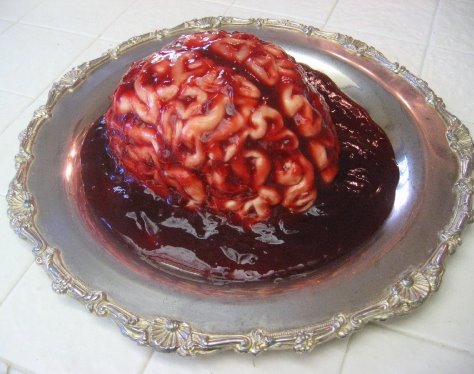
Check out this week's Synapse over on Neurocritic's blog. He's got a great bunch of scary Halloween pics for you blogging trick-or-treaters (I especially like Omnibrain's recipe for Live Brain.

Monday, October 30, 2006

Say WHAT?!

It's really late but I just had to put up a quick post about this. You can title this "Judge Rules Inmates Have Right To Bear Arms". A Maryland inmate was recently acquitted of first degree murder after an instruction given as follows:
On Friday, Judge North read a short passage to the jury that included this statement: "A person may arm himself in reasonable anticipation of an attack."
The offense happened in the same facility where an officer was killed last July. Enough said.

Sunday, October 29, 2006

The Elephant on the Couch


[posted by dinah]


So anyone who reads this blog regularly must have figured out that I spend my Sunday mornings with The New York Times and a pot of coffee.

An article in today's style section, The Elephant in the Room, caught my attention because I have a mixed marriage: one of us is a Democrat, the other Republican, and after lots of years together, we've managed to accommodate to life with an elephant chronically in the room. As the article notes, keeping quiet about political views helps friendships, it also keeps this marriage happy.

A gentleman interviewed for the article notes: "People just assume you are a Democrat, and turn and look at you and say, 'Can you believe what this nut in the White House is doing?'

Elsewhere in the piece, it is noted:

Frank Luntz, a Republican pollster who conducts focus groups nationwide,
agreed, saying, "In most parts of this country it is very difficult to have a
civilized conversation between two people that fundamentally disagree."
Which, while perhaps invigorating for television ratings, is proving less so
for the nation's social fabric.


Interesting. That particular Republican pollster was a guest at our wedding, but since this is a psychiatry blog and not a political blog, I won't burden you with which side he sat on.

So patients come to therapy-- not exactly where conversation is limited to polite chatter-- and they do talk about their political views, often quite vehemently. Without fail, they assume I share the same views and the question of What that Nut is Doing in the White House pops up, over and over again. I sit quietly and listen, though not infrequently questions are posed to ellicit not so much my opinion, but my explicit agreement. I find it a funny dynamic, not because I either agree or disagree, but I do feel psychotherapy is someplace people should feel free to express their opinions without the burden of the therapist's political/religious/cultural beliefs; it's therapy, not an opportunity for conversion. If I were to agree (which sometimes I imagine I can't help but convey) it's a conversation; if I were to disagree, I can't imagine that it would be anything but troubling to a patient. Who wants to confide in someone who feels strongly opposed to the things you might believe in as part of the core of who you are? And even when I do agree, I'm left with the fact that the person I love and respect most in the world (that would be my husband) holds views that oppose mine and the colluding patient's-- it leaves me with too much cognitive dissonance to buy into the idea that all members of the other political party are Evil & Stupid.

Mostly, I'm quiet, and when I get drawn in in a way that makes me uneasy, I try to say something noncommittal, such as, "It will be an interesting Election Day."

Saturday, October 28, 2006

What I Learned: Part 1


For the past week I've been attending my annual professional conference. Lest anyone think I've been lounging around the pool, touring the city or just hanging out instead of seriously learning anything, I've decided to post a random sampling of unrelated things I've learned at this conference. I think it's a good representation of the range of topics that get presented every year. This is the first of a three part series of posts entitled "What I Learned". Again, these items are presented completely at random and have no relation to one another.

Here goes:

  • Robert Simon gave a great keynote speech entitled "Authorship in Forensic Psychiatry". Now, some people are born writers (like my co-blogger Dinah) and some are not. Dr. Simon is a born writer who will probably be buried with a pen or two in his front pocket and he will continue publishing from the grave. I am not a born writer so I appreciated the advice he offered: don't even look at a piece of paper until you have a paragraph or two already written in your head. If you run into a blank patch, keep writing because you can always edit it later. Set a consistent time for writing in a quiet space with no distractions. There were many more relevant bits but I'm trying to keep this brief. I spoke with him afterward and mentioned Shrink Rap, and he asked me what a "blog" was. I tried to explain (poorly) and ended up sending him a link to Shrink Rap instead.
  • People are more willing to talk about the accuracy of criminal profiling rather than the ethics of doing profiles.
  • People who are fascinated by serial killers and who want to hear about them have probably never met one.
  • The BTK serial killer once worked for the ADT home security company.
  • Under Sharia law women are not allowed to speak in court. Certain serious religious offenses, called hadd offenses, are punished through stoning or amputation. These offenses include rape, theft and robbery, fornication and adultery. In some countries the amputations are carried out by physicians. Under Sharia women are not allowed to speak in court or testify. I heard a talk by a female human rights lawyer from Nigeria that was fascinating; the audience was completely silent while she described the lengths she had to go to to avoid assassination travelling to and from court.
  • One California judge stated that he is bound to the same level of confidentiality as any other mental health professional involved in his mental health court program. They stopped questions before I could ask him how he preserved confidentiality while discussing a defendant's mental health problems in open court.
  • Mental health courts decrease frequency and length of incarceration, increase compliance with mental health care and improve the quality of life of the defendant. Of the 200 defendants involved in one mental health court program, only 2 became employed as a result of their involvement. The goal of mental health court most realistically appears to be to minimize the cost to society rather than helping the defendant achieve employment. This is probably an indication of the severity of the illnesses suffered by these defendants.
  • The majority of psychiatrists sanctioned by physician boards are male (90%) and sanctions are agreed upon without an administrative hearing. They are typically guilty of sexual boundary violations and are given multiple sanctions including license suspension, probation, and requirements for counselling and supervision.
  • In 2004 less than 2% of violent sexual offenses reported in the Uniform Crime Reports were committed by women.

That's the end of Part 1. It's been a great conference so far.

And yes, I have toured the city a bit and will be lounging around with friends tonight.

Friday, October 27, 2006

You Heard It Here First

I knew it. I always suspected it, but now I know for sure. Someone from the New York Times is reading Shrink Rap. I knew this even before our little go-around with The Ethicist. Here we have an opinion piece straight from the Dinah play book:

"Will Play For Food"


So Mr. Coban has a problem with being a Snack Parent. Coincidence? I think not.

"48 Hours" looks at Scientology: Saturday night at 10 EDT

48 Hours
From the APA: "This is a special alert to watch CBS's "48 Hours" investigative news program this Saturday, Oct. 28, 2006, at 10 p.m. (ET). This edition of the show features an investigation into the Church of Scientology, and begins by recounting the tragic death of Scientologist Elli Perkins. Perkins was killed in 2003 by her son, who was suffering from paranoid schizophrenia but was mostly treated in accordance with Scientology protocols. The program asks the question Did A Mother's Faith Contribute To Her Murder? and then delves into broader issues, including Scientology's opposition to psychiatry."

[Edit]=====After the show=====
Dr Roy [it's a different Dr Roy]: "Tom Cruise and his 'religion' are more dangerous than I thought."

Dr RW: "Just got through watching the documentary..."

Leigh from Thoughtprints: "What's scary is that there are 10 million members worldwide. How can that many people allow themselves to be brainwashed by crap like that?! If any of you 10 million are reading this, I bet you're really pissed, huh. Whatever."

KFAN Rube Chat: 'The thing that really annoys me is that they use a cross as the symbol outside of their "churches". If you're such an enlightened religion, spoken to by aliens, wouldn't you have a more creative, or original symbol than the cross?

Wednesday, October 25, 2006

How To Live : The Basics in A Few Easy Steps

[posted by dinah]

I'm diverting from mainstream psychiatry for a moment.

In yesterday's online Wall Street Journal there is an article by John Jurgensen called
"
Not Sure How to Tie A Tie? Peel an Apple? Fold Your Clothes?"

Mr. Jurgensen writes:


It's the next iteration of the burgeoning self-help industry: teaching people the obvious. After the success of do-it-yourself books and TV shows that offer expert advice on everything from baking your own wedding cake to remodeling a four-story home, a number of new Web sites are hoping to make money sticking with the basics. On eHow.com, one of the most popular topics is "How to Boil an Egg" -- broken down into six steps of written instructions. Videos at ViewDo.com, launched this summer, address such matters as how to peel and slice an apple. WikiHow.com provides a written tutorial on playing "Hide and Go Seek." (Step Three: "Determine who will be 'It.'... Use 'One Potato, Two Potato' or similar method.")

Hmmm. I'm not aware that I'm having much trouble with the basics, my apples get peeled and my clothes get folded and if my technique is wrong, well, I'll probably be happier not knowing that. Apparently 40,000 people have watched the "How To Take A Shower" video, I had to bite, so now it's 40,001. I will add that I believe my technique was fine before and it's medically inaccurate when Mr. ShowerDemonstrator states that washing with soap between the buttocks prevents hemorrhoids.


So I kept reading. I don't need to tie a tie. I already make a mean peanut butter and jelly sandwich. I can indeed freeze ice and just in case, my freezer has an automatic ice maker. This line, however, grabbed my attention:

A primer on how to "do nothing" is among the 50 most-visited guides.

I'm just not that good at doing nothing. So I clicked and read. Seven simple steps. I got anxious just reading them. Turn off my cell phone, I could do that. Number 7 reads: "Learn how to Free up You Mind." You mean I can't think about my next blog post while I'm doing nothing?? Then there's a few tips, they include getting candles and I like that: it's goal-directed, at least if I'm going to do nothing then I'm going to do something before I do nothing. I am left with questioning exactly Why I'd want to do nothing. My favorite part, however, is the end of the instruction set:

!Warnings
At first you may feel nervous, jittery, and restless. Try to relax and understand that doing nothing does not mean that you're being unproductive or irresponsible. Keep in mind that you are doing this in order to clear your mind and ultimately extend your life so that you will have even more time. Ultimately, setting time aside to recharge your batteries will make you more productive, creative, and more able to concentrate in the long run, and that's very good for work, school, or other.

I think blogging may be my version of Doing Nothing.

Sunday, October 22, 2006

Roy: Trick or Treat?


Reducing the stigma of mental illness has been very effective in helping to educate people about the realities, not the myths, of brain illnesses that affect ones thinking, mood, and behavior.

NAMI has been one of the leading organizations in "stigma-busting", taking exception to insensitive and cruel representations of people with psychiatric illnesses. "Crazy Eddie's", "Psycho-Sam", and last year's "Crazy for You" bear (complete with straight-jacket) are examples of the types of things that they speak out against. Interestingly, these are usually marketing schemes. The Vermont Teddy Bear Company took a lot of heat last year for their "crazy bear", but did not back down (or, at least, not until after the last bear was sold).

'Tis the season. Halloween seems to always bring out the stigma and stereotypes, with insane asylum haunted houses and Cincinnati's PsychoPath, an outdoor "trail of fright."

Folks who speak out about this are often derided as being party poopers or too politically correct. But c'mon, would folks really set up a haunted house filled with AIDS- or cancer-related metaphors ("Look out for Leukemia Lucifer and Candida Casper").

Anyway, I thought this was a good article that brought attention to the issue. The worst one they mention is the newspaper article about the fire at the psychiatric hospital... headlined "Roasted Nuts".


From other blogs:
from Psychlinks Blog: "Recently, I commented on a painfully misguided and misinformed call to remove the term “schizophrenia” as a diagnosis on the grounds that it might be stigmatizing..."
* * *
from GNIF Brain Blogger: "Another serious effect of stigmatization is its potential to erode the self-esteem of individuals with disorders. When an individual expects and fears rejection by society, feelings of self-esteem and self-worth will be compromised, and one research study empirically proved a connection between the level of stigma perceived by individuals with disorder and their feelings of self-esteem."
* * *
from Write Out Of Depression: "What can you do next? Check out the links listed on the right side of this page for information, encouragement, ideas on creating art and literature, and finding a support group, good doctor, or therapist. All of these resources can help you break out of the internal stigma you may be carrying."

An Open Response to Randy Cohen: The New York Times Ethicist


[posted by dinah]

In today's New York Times Magazine, The Ethicist tackles the question of how an attorney should deal with a suicidal client around the issue of preparing a will in "A Suicidal Client."

In the question posed, the attorney notes that the client asked how her will would be affected if she commited suicide. The attorney asked if she was seriously contemplating this, the client said no (hmmm, then why did she ask?), but the attorney also notes that the client has a psychiatrist (this point, to me, is key).

I'm okay with the beginning of Mr. Cohen's response: "You should do your job." The question sounds to be coming from a theoretical standpoint, and the patient has a psychiatrist. So let's hope the patient isn't lying, doesn't leave the office and jump off a bridge, and everyone involved isn't left to feel badly. Given that the client has already told the attorney that she has a psychiatrist, it might be good if the lawyer steers her back there. Or, in an ideal world, honestly says, "I'm uncomfortable with this, would it be okay if I touched base with your psychiatrist?" He could then leave a message for the psychiatrist saying the client asked about how her will would be carried out if she committed suicide, and the psychiatrist could take it from there. It's not breaking confidentiality if the client gives permission for the communication. I won't go into all the different possible avenues to try if the client refuses permission.

Okay, this isn't really my problem with the article. My problem comes in with this:


If your potential client has made a reasoned choice for suicide, your task is not to dissuade her (you are, as you suggest, not a trained therapist) but to provide legal advice, to help her get her affairs in order. You can urge her to discuss this with her psychiatrist or her family.
Mr. Cohen goes on to say:

If however, she is clearly deranged and a danger to herself, then you must seek help for her. Of course, in such a case you are forbidden to prepare her will; as you know, she must be of sound mind for that.

He goes on to finish:

It should be noted that many psychiatrists discount the idea of rational suicide, except when a person is terminally ill and suffering intolerably. It is, however, beyond your purview to make such sophisticated judgments. If your client seems rational, and she does, you should help her draft her will, but I don't envy you the moral burden of doing so.


I'm not touching the issue of "rational" suicide, last I checked all suicide is illegal in my state. What I will touch is the entire concept that the attorney should be the one in these life-or-death issues to make the decision as to whether the client is Rational or Deranged. Sure, there are some instances where it's obvious even to an untrained person that someone is irrational if say they are talking about alien invasions or talking in nonsense streams, but it's possible, even likely, that one can hide that they are severely depressed, or even that they are delusional, long enough to get through a meeting. And hey, isn't "rational" a judgement and not a diagnosis? -- I think people who are afraid to fly in airplanes are irrational and even I would let them draft their wills. What if the attorney agrees that it's rational to kill oneself under a given condition, say bankruptcy? This isn't a litmus test for anything. Last I checked, people don't wear color-coded T-shirts with "I'm Deranged" signs on them, and one can calmly drop their children at the bus stop and then go slaughter Amish school girls. The attorney isn't qualified to diagnose, he shouldn't be expected to do so.

So, if I'm reading Mr. Cohen right-- and remember, I know psychiatry not law-- it's illegal to prepare a will for any one not of sound mind, so it seems to be that an attorney put in an uncomfortable position can always ask a client to get a psychiatric opinion before he drafts the will. Sure, the client can go to another lawyer and lie, but a chronically suicidal patient can also choose to drop out of psychiatric treatment. We only control what we can control, but to take the stance of "he looks rational to me and besides, someone else might get the fee if I don't" is irresponsible.


In sticky situations I ask myself, if something bad happens, will I be left thinking there was more I could have done? I don't think such a question is limited to psychiatrists. In life or death matters, it's not just about a minimalist interpretation of the law; we all like to sleep at night.
* * *
Oh, and just an FYI on another topic. The New York Times has a heartfelt story about one family trying to cope with their child's mental illness. See "Living With Love, Chaos and Haley."

Thursday, October 19, 2006

Fully Charged Battery

As Dinah once said early on in the Shrink Rap blog days, "I'm Concerned About Fat Doctor". Yesterday FD wrote a post about an angry, drunk former patient who showed up at her clinic and threatened to kill them all. This is not a good thing. The police responded, tracked the guy down and warned him away. While lots of comments offered support, I was left feeling a bit dissatisfied and disconcerted. Hopefully Angry Drunk will not return to the clinic, but even so it seems to me that he has successfully avoided any consequences for threatening to kill many people. It left me with the question that I'm going to post to the blog, although without a poll this time:

Should you press criminal charges against your patients?

This is a policy question that inpatient units wrangle with on a regular basis. It comes up most often on forensic units but it can also be an issue on general medical wards. When I was in training (back in the Days Of The Giants) our admission agreement, signed by all new admissions, stated that anyone found in possession of contraband (ie drugs) would be discharged. I didn't think too much of it at the time, but years later I thought it interesting that there was no mention of automatic criminal charges. To me that was like telling the patient, "We won't treat you but if you promise to leave quietly we won't call the police." When the stakes are higher and the behavior is more serious, the situation gets trickier. What if your inpatient beats up a nurse? This is dicey---sick people sometimes do sick things, that's why they're in the hospital---but sometimes not-so-sick people do sick things too simply because they're angry.

The decision to charge-or-not-charge is not an easy one. Off the top of my head I don't know of any hospital that has an automatic prosecution policy for assaultive patients. Usually the decision is left to the victim with or without the explicit support of hospital administration. Fortunately in correctional facilities there is a well defined process with consequences for behavior like this. Unfortunately for free society, it can be an uphill battle to pursue charges when the prosecutors themselves are reluctant to take cases involving inpatients.

On the "con" side of the argument (pun intended) there are those who state that prosecuting patients serves to punish people at the very time they are seeking help. Prosecution undermines the safe-for-the-patient atmosphere that is necessary for successful therapy and it further criminalizes the mentally ill. The most extreme anti-prosecution argument I've seen suggested that going to the police was itself a violation of confidentiality.

So there you have it. Let's hear it. And for the record, an assault or threat in my facility could get you 30 days in segregation.

Wednesday, October 18, 2006

Flabbergasted


According to Dictionary.com, the definition of flabbergasted is: "to overcome with surprise and bewilderment; astound".

I'm writing about the state of "flabbergastment" because I've had quite the last couple days in clinic this week. While I don't write about individual patients, I can tell you that I have had an amazing run of people who are---gasp---doing rather well. Here are some of my favorite sample quotes for the week:

"I really appreciate what you did for me, doc."

"Out of everybody in the building, your department does what they say they're going to do 99% of the time. When you say you'll see somebody, you see them."

Oh my. This just never happens. Or rarely ever. Mostly I live by Shiny Happy Person's "Eff You" test, which states you are not cut out for psychiatry if you can't handle being told to fuck off. Two compliments in two days is quite the streak of good luck. I am enjoying a rare episode of tranquility, medication compliance, remission, peace on earth and good will toward shrinks.

How boring.

I understand there are places where psychiatrists have nice patients. People without sociopathy or an overabundance of substance abuse. Patients with resources, families, careers, futures. Maybe someday I will know what it's like to have a practice like that. Someday when I'm old and grey (don't touch it Dinah) and can't do the professional heavy lifting anymore I will tap my ruby slippers and go to that nice place. Then again, maybe not.

On the whole I am not an adrenaline freak. I don't drive fast or jump from planes. I like downhill skiing but only the nice long gentle slaloms and not the blood-rushing-in-your-ears, wind-in-your-face-so-you-can't-breath, Sonny-Bono-killing kinds of downhill speed skiing. And my line of work doesn't generally involve that kind of excitement if everything is running well. So what was the great thing I did that caused that inmate's gratitude?

I called in a prescription for him. How boring. How nice. How worth coming back to.

Monday, October 16, 2006

For The Record


Dr. A wants to talk about Electronic Patient Records.
Who can blame him? It's all the rage.

Okay, so psychiatrists don't do Electronic Patient Records, at least none that I know of. I work part-time in a clinic associated with a major hospital center, for every department except psychiatry, notes go into an EPR system. From my point of view, this is terrific, when a patient comes in and says they're on the white pill for their blood pressure, I can access the primary care note and see which little white pill. When they say a lump was found in their you-name-the-body-part, I can look up the radiology reports and see whether this is worrisome or not. Need labs? Maybe they were done last week and don't need to be needlessly repeated, I can look them up!

So what's the down side? Privacy, I suppose, and really I don't think about this from a health care point of view, but from the perspective of being a potential patient/employee of this major medical center. There are safeguards on the system: employees are told never to access the records of those who aren't their patients, we are told that who accesses the info is easily traceable, and the sanctions are considerable, but there isn't a full-proof guarantee that someone who is curious won't access someone else's records.

Somehow, my baseline is to be fairly paranoid about my own medical information. This is an interesting concept given that my existence has generated a minimal amount of medical information, none of it too colorful, and it mostly boils down to I never want anyone anywhere to know what I weigh. Still, some of my patients Google me, and some of my patients have access to the EPR; might a curious patient do the Google equivalent of checking out their own docs in the EPR?-- Just as an aside, how does confidentiality work if a health care worker patient confesses to a psychiatrist that he has illegally accessed the psychiatrist's private medical information? Can the shrink break confidentiality in order to stop the patient from continuing to violate his own confidentiality? Hmm....let's not even go there and I'm sorry if I gave anyone a headache thinking about this.--- And what about my co-workers, my supervisees, and a good number of my friends and neighbors, many of whom can enter the EPR? The bottom line is that I'd have to be pretty sick to seek care where I work.

So no, I've never looked up any one in the EPR out of curiosity; when I see a patient in my private practice who has had care at the hospital, I ask permission to look up their medical information. Invariably, I'm told, "You're my doctor, of course you can look at my records." It seems to me that I need to ask permission, given that they are seeking my help in an isolated setting and wouldn't naturally assume I'd have access to this information. When I see a patient in the clinic, I never ask permission, I often have their medical records printed out in front of me before they even arrive. By getting care at this hospital, a patient implicitly gives consent to have their information entered into the EPR.

.>>>>>>>>>>>>Take My Poll<<<<<<<<<<<<<

Saturday, October 14, 2006

HIPAA-Crit

This post is not about suicide. Suicide is an important topic and there's been some good discussion here, but frankly it's getting to me a bit. I went out to dinner last night with a friend who had to identify her brother's body ten days after he killed himself. Then she had to clean up his blood soaked room. Then we had a suicide in our neighborhood a week or so ago, and my neighbor still hasn't been able to return to the house. So as far as the blog topic goes, my final word would be: Just Don't Do It (with apologies to Nike). It's a freakingly mean thing to do to your loved ones and friends.

**********


And now for something completely different:

I'm going to pose a problem to our readers and ask for advice---how's that for a switch? (Actually, I just needed an excuse to try out our new polling feature.)

Here's the situation:

I went to the bank this past Saturday. It's a rather small branch, and on weekends it's crowded. On this particular day the line for the teller curved around the perimeter of the lobby where two people were waiting to see a banker. The first person was a middle-aged woman and a young man with peach-fuzz cheeks (for future reference, Peach Fuzz Man). The woman was talking to Peach Fuzz as he tapped on his PDA. He appeared to be looking something up. I wasn't paying much attention until I heard Peach Fuzz say the phrase, "You definitely meet DSM." At that point my ears pricked up like Harold the Vampire Cat in front of a humming bird (but without the jumping at the window part). I heard some more mumbling and then I heard Peach Fuzz state quite authoritatively, "You need a full cardiac workup." Now, by this point I'm somewhere between amazed and aghast.

Every physician has been in a social situation where someone asks for clinical advice after they find out what you do for a living. I generally say something about not discussing individual cases in public, or I'll talk about a diagnosis in general terms without reference to any particular individual details. I think this situation takes the case as far as lack-of-privacy goes. I have no doubt that every person standing in line heard as much of that conversation as I did.

I'm making a lot of assumptions here, I know. I'm assuming they didn't know each other before they came to the bank, and that during casual conversation the woman found out what Peach Fuzz did for a living and asked for professional advice. I'm assuming Peach Fuzz has some medical training, although what happened sounded more like medical student or intern behavior. (Then again, there are faculty physicians around here these days who look pretty Bambi-ish.)

So there's the situation. My question for the blog is, what would you do if you heard a doctor discussing this woman's case in public? Unfortunately the poll doesn't let me ask questions about the voter, because I'd love to know if people had different advice based on whether they were health care providers or patients. Regardless, give it a shot and then see how others voted.

Friday, October 13, 2006

Let's Talk About Suicide


[posted by dinah]


The post I wrote on Suicidal Students got a number of comments, some of them rather distressed and distressing, and while stirring things up is kind of the point of our Shrink Rap blog, I realized I created some unintended fallout: there is the impression here that what one says to a psychiatrist becomes public information that can be used against you. While we are a blog by and for psychiatrists, I don't want our patient, or would-be patient, readers to be spooked out of seeking help.

First, let me say that I believe strongly that students should be able to seek help for their problems without fear of consequences. Mostly. If a student goes to a psychiatrist and threatens to kill others, confides that they have been sexually abusing children, intends to murder the president, or is concocting a terrorist plot, the psychiatrist is obligated to report or warn others. So no, this isn't confidential, though hopefully the psychiatrist is able to weed out plan and intent from simple thoughts or fantasies and the student/patient gets helped before someone is hurt and the student's life is ruined.

In terms of suicide, oh gosh. A psychiatrist is obligated to do something about suicidal intent, be it hospitalizing the imminently suicidal patient, or intervening in a way to prevent the occurrence of the act--for example asking a family member to sit watch over the patient. Why do I differentiate between intent and ideation? Simply put, Major Depression is a common illness, and thoughts along the spectrum of WantingItToEnd-- starting with feeling hopeless and progressing through a range of passive death wishes to suicidal planning-- are Symptoms of the illness. I'd say many people have these feelings, but actually I believe that most people with Major Depression have hopelessness &/or death wishes with varying intensity at some point during their illness. I was surprised to read the comment of the doctor who had never had a patient admit to suicidal feelings. The majority of patients I see have at some time thought about hurting themselves; few have acted on them. Viewing it as a symptom, and a common symptom at that, it takes more than the confession of a Thought to get me nervous-- I have to have the sense that something has changed, that this is acute, that there is some imminent risk, before I start thinking about violating someone's confidentiality. This is all much easier with an ongoing patient whom I know, and I think clinicians are much more likely to err on the side of being too careful when they don't know a patient well and aren't sure how safe it is to let someone go home--the stakes here can be very high for someone's "best guess."

Oh, and yes, I worked briefly (during my residency) at a major university student mental health center where I saw suicidal patients and it never occurred to me to report anyone's thoughts to the administration. Simply put, suicidal thoughts and behaviors are so common in psychiatry, both as symptoms of Major Depression and in many other psychiatric disorders, that universities and student mental health centers can't possibly be tossing out every student who reports such ideas.

Universities have been successfully sued when students have committed suicide. This has led them to act defensively; they don't want the responsibility for suicidal students and some don't feel they can provide a careful enough level of supervision, especially in the dorms. Plenty of schools, however, have a protocol for managing students following hospitalization and yes, psychiatrists sometimes clear students for return to the dorms and to classes, even if The Last Psychiatrist doesn't believe it.

The two stories I linked to (that of the Hunter student thrown out of the dorm for a suicide attempt, and of the GWU student barred from the campus for suicidal thoughts) are provocative stories, I blogged about them because they caught my attention and got me riled up. Hunter College has re-evaluated their policy. In the GWU case, it's still in litigation and the university has not made any statements; the Washington Post article presented only the student's side, so I do believe there may be more to this story. Some of our commenters have also posted distressing student mental health stories; my hope is that these are the exceptions, otherwise I imagine that such clinics would be boycotted by all.

Am I sure it's safe to tell a Student Mental Health Center therapist about suicidal ideation without fear of dismissal? It seems reasonable to me that any new patient might ask who has access to his records (no, therapy notes shouldn't go to the dermatologist) and how sensitive information is handled. Anyone contemplating suicide should get help-- even if your school has archaic policies, it's better to have a semester off to heal than it is to end up dead.

I wish we lived in a world where it was all about doing the right thing and not the fear of being sued.