Dinah, ClinkShrink, & Roy produce Shrink Rap: a blog by Psychiatrists for Psychiatrists, interested bystanders are also welcome. A place to talk; no one has to listen.
Thursday, December 08, 2011
The Secret Lives of Patients
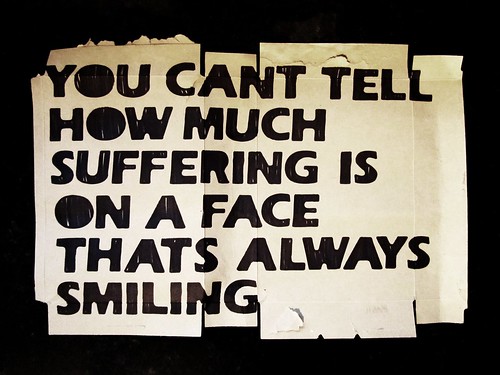
In yesterday's post on e-prescribing, the issue of patient confidentiality came up in the context of doctors being able to see a patient's full medication history in an electronic program, and one commenter brought up that she doesn't necessarily want to tell her shrink about a yeast infection, perhaps because she finds it embarrassing. The writer of the post, a guest blogger, suggested that this might lead to useful information that should be addressed in therapy, for example the patient's sexual life.
Years ago, I remember being a bit taken back when a patient brought up some rather problematic (to him) sexual issues in his marriage. It wasn't the nature of the issues that surprised me (I spent more than a decade consulting to a sexual behaviors unit and I spent several months of residency training on an inpatient sexual disorders unit: it takes a lot to shock me). What surprised me was that this was the first I was hearing about this issue after seeing the patient for 5 years of psychotherapy. He had a secret life.
There's not really much to do about this. One can only help people with the things they bring forward as problems, and we don't, as one commenter pointed out, get notified by the bars every time a patient drinks, or doesn't exercise, or begins yet another dysfunctional relationship, or surfs over to a porn website. Oh, and I am so glad.
When it comes to hiding medications, or treatments, then perhaps that's different. Is it okay for a patient to see one doctor for a Xanax prescription, and if he's not happy with the dose, to see another doctor for more Xanax? If he's not selling it, I don't think this is illegal, but we'd (meaning docs) all agree that this is wrong, that the patient is deceiving us, and wouldn't prescribe to someone doing such things. Is it okay for a patient to hide the fact that he has AIDS, a condition with known psychiatric complications, from his psychiatrist? We might say that if we're not aware of the medications a patient is taking, then we can't be liable for the interactions, but please-- in therapy it's not just about the fears of lawsuits between strangers, it's also about not wanting to see your patient get sick for completely preventable reasons.
So where is the line? Is it okay to hide manic behaviors from a psychiatrist---it's none of his damn business if I wanted to sleep with 8 gorgeous women last night and buy them all diamond rings! Is the psychiatrist entitled to know every behavioral transgression? That he's worth millions when he's getting a discounted fee from the shrink? That mom thinks he's getting sick again? Every fantasy that pops into his head? Is it okay to withhold your dreams from your psychoanalyst?
I won't go on. You tell me where the exact line is. I have no idea.
Wednesday, December 07, 2011
Guest Blogger Dr. Jeff Soulen on the Pros of E-Prescribing
Over on our Clinical Psychiatry News website I'm writing about my struggles with electronic prescribing. The post, "To E-Prescribe or Not? That is the Question" will be posted on December 7, 2011. In order to write it, I bothered just about every shrink I know, or it least it felt that way. One of the psychiatrists who was kind enough to respond with a great deal of useful information was Dr. Jeff Soulen, a psychiatrist in private practice, who has had a positive experience. This is Dr. Soulen's first experience as a blogger.
------------------------------------------------------
I've been using Allscripts for about 3 years now, and I must say I like it a lot. It's free (no need to sign up for the paid Deluxe version) with a browser-based interface, so I can access it anywhere -- helpful when I'm away from my charts. I pretty much do 100% of my scripts electronically except controlled substances, for which it's still illegal to e-prescribe. What I like about it:
- I see a list of every script my patient has filled, including those from other docs, though this information is sometimes spotty. It's led to some important discussions about controlled substances I didn't know the patient was taking, drugs that have interactions with the ones I'm prescribing, etc. Kind of wondrous to enter a patient's name, zip and birth date and 5 minutes later the whole list is on your computer screen.
- Patients love it. Once they are in the system-- which takes a couple minutes the first time-- it takes me no more time to send a script electronically than to hand-write it, and by the time they get to their pharmacy later that day, the script is ready for them - no need to bring a paper script and wait.
- For repeat scripts, it's faster than hand-writing - select from the list of scripts you've sent previously for that patient and send.
- No more transcription errors from a paper or phoned script.
- It's been a huge time-saver in that I no longer get calls requesting refills of scripts where I wrote refills, but the pharmacy in their rush put 'no refills' in their computer. This used to happen a lot.
- All the mail-order pharmacies seem to be tied-in at this point, so sending mail-order scripts electronically is as easy as sending to a local pharmacy. Way faster than filling out fax forms by hand, then faxing them. And patients seem to receive mail-order meds about 4 daysafter I send an electronic script - significantly faster than faxed or phoned scripts.
It is true that an occasional script fails to make it through the system to the destination pharmacy. So far that's been well less than 1% of the scripts I have sent, and re-sending a script a few times a
year takes much less time than calling patients/pharmacies several times a month to tell them that yes, the original script did have refills on it.
If you want to prescribe from a smartphone, you have to purchase the Deluxe version. I don't know how much that costs.
Bottom line, for my solo private practice it's been terrific -- faster and more accurate for me, gives me information on drugs my patients are taking and have failed to mention, and patients love it. I e-prescribe for all those reasons, not because of Medicare penalties.
----------------------------
If you surfed over to the CPN article, you'll know that my experience with e-prescribing has not been as happy as Dr. Soulen's. Of course you're invited to tell us about your experiences...
Tuesday, December 06, 2011
What to Get Your Psychiatrist for the Holidays
This is an update of a Shrink Rap post that originally was posted in 2006. Seems like a good time for a re-run.
Sarebear mentioned some time ago that she didn't know what to get her psychiatrist for the holidays. I thought about this and decided the answer is easy:
Give your psychiatrist a holiday card and write something meaningful and kind in it. Say, "Thanks for helping me." Or "I'm glad you're in my life." "You're the best psychiatrist in the world" works nicely, too. If you hate your psychiatrist and for inexplicable reasons feel compelled to get them something anyway, then skip the note and just give a generic Seasons Greetings card.
Don't get your psychiatrist an expensive gift. And don't, not even as a joke, give your psychiatrist money-- unless you're paying an overdue bill-- and don't make comments about a holiday "tip."
So gifts and shrinks are often an unsettling combination. As psychiatrists, we're taught that treatment is offered for a fee. End of discussion and anything more represents a violation of boundaries. Psychiatrists-in-training are told not to accept gifts, and psychotherapists as a whole are taught to try to understand behaviors that skim the usual boundaries. So, theoretically, the psychiatrist should refuse the gift and explore with the patient what meaning the gift, the refusal, the whole exchange, has to the patient.
When residents ask me what to do when patients want to give them gifts, I say "Tell them the program has rules that say you're not allowed to accept gifts." This is the truth and the resident risks getting in trouble if they do accept gifts. If you can't take a pen from a drug rep anymore, why should you be allowed to take a timeshare from a patient? Okay, I made that up, I've never heard of a patient gifting a resident with a timeshare, but we can all have fantasies, right?
I'm in private practice, there's no program director, I make the rules. When a patient gives me a gift, I accept it and say, "Thank you." Why? Because it seems intentionally hurtful to do otherwise-- I assume it has meaning to the patient, that their feelings will be hurt if I refuse the gift, that the patient has taken the time, effort, and money to pick out a gift and this represents something meaningful to him and that it might be painful to have this refused. While the act of giving a gift might have a multitude of meanings, depending on the gift, depending on the patient's illness, depending on the circumstances, I just can't find a way to say No that would feel anything other than rejecting. So I accept the gift and thank the patient, and if the gift is edible, I eat it. This is the thing though: while I've decided that this is the way to go, at least so far for me within the realm of my own practice, I always feel like I'm doing something wrong by accepting a gift. Training issues remain in the back of my head, and I'd really rather just have a card that says I'm the best psychiatrist in the world.
Disclaimer in honor of other non-shrink physicians: Doctors in other specialties have no such concerns with accepting gifts. They probably don't want anything that taxes your budget. Food is usually good, a bottle of wine, a plant, candles, all will do nicely, and no doctor expects gifts from their patients.
Sunday, December 04, 2011
Podcast 63: The Bystander Effect
These are the topics we talk about:
The Bystander Effect and why people don't call for help when they see violent crimes. While we don't talk about the events at Penn State, this was the inspiration for this topic.
From this we go on to talk about legislation that has been proposed to make it a crime for health care workers (including shrinks) to not report child abuse. As is, there are mandatory reporting laws and licensing implications for those who do not report instances of child abuse.
Finally, we move on to happier techy stuff and discuss Depression Rating Apps.
Roy reviewed iTunes apps with the keyword "depression" which met the following criteria: Medical category; a rating of at least 3 stars, and at least 100 ratings. Five apps came up:
- 3D brain (9600 ratings: not a rating tool but a nice 3D map of the brain)
- Sad Scale Lite (800 ratings: uses a Zung depression rating scale)
- DepressionCheck (700 ratings: uses a 27-item validated screen for depression, bipolar, PTSD, and anxiety)
- Moody Me (600 ratings: an emoticon-based mood diary)
- Health through Breathing: Pranayama (300 ratings: not a rating tool, but a highly-rated meditation tool)
[Disclosure: Roy has consulted for M3, the makers of DepressionCheck.]

This podcast is available on iTunes or as an RSS feed or Feedburner feed. You can also listen to or download the mp3 or the MPEG-4 file from mythreeshrinks.com.
Thank you for listening.
Send your questions and comments to: mythreeshrinksATgmailDOTcom, or comment on this post
To review our book, please go to Amazon.
Labels:
civil litigation,
crime,
de,
iPad,
iPhone,
technology,
whatsmym3
The Reversible Causes of Dementia
I'm writing this post because the New York Times has been writing about how thyroid disorders and Vitamin B12 deficiency can be responsible for neuropsychiatric symptoms.
Read the article about Vitamin B12 here.
Read the article about Thyroid function here.
This is news? When I was in medical school, the knee jerk response to memory complaints was to order labs to rule out the reversible causes of dementia: CBC, Chemistry panel, VDRL (syphilis), thyroid function tests, folate and B12 levels, urinalysis, and then perhaps a brain CT.
So let me tell you how a physician thinks about dementia. First let me tell you what dementia is: the decline in cognitive function from a prior baseline, often seen by the patient as memory problems, beyond what would be expected with normal aging.
A patient presents with complaints of memory problems. The physician (usually an internist or primary care doc) takes a history: when did this start, did anything precede it, are things stable or getting worse? What exactly is happening and is the patient actually having memory problems? Sometimes people think they are having memory problems, but really what is happening is that they are anxious or distracted, so the information never makes it into their brain to be retrieved or remembered later. "I told my husband to take out the trash during the Super Bowl and he didn't remember to do it." A quick measurement of memory may be done, such as the Mini-Mental Status Exam, which tests a variety of components of cognition such as orientation, the ability to immediately recall, memory, concentration, the ability to follow directions, and the ability to copy a diagram, write a sentence, and follow a written command. It's a simple test, and most people get perfect scores, and it's a quick way to follow progress over time. A physical exam is done, including a neuro exam, and if there are focal findings --like the absence of reflexes or weakness, or loss of sensation, or a history of loss of consciousness, seizures, or a head injury-- these are noted.
The only way to be 100% certain of the type of dementia is to biopsy the brain. We don't generally do that. Instead, we rule out the "reversible" causes of cognitive decline-- infections, thyroid disorders, neurosyphilis, folate orVitamin B12 deficiency, or metabolic problems such as confusion with markedly elevated blood glucose or neuropsychiatric symptoms with hyperparathyroidism. Some of these illnesses are discovered with blood tests, others require a scan to look for anatomical lesions, like hydrocephalus, stroke, subdural hematoma. If a reversible cause of dementia is found, it can be treated and it will often get better. Oh, and I should add that Major Depression can mimic mild dementia, and this too can be treated, it's called pseudo-dementia and when the depression gets better, the dementia gets better.
If a patient has dementia, and the reversible causes are ruled out, then the diagnosis of depression is based on the features of the disorder and the course it takes. Alzheimers' disease is the most common type of dementia, and it has a progressive course with some predictability. Patients with Alzheimer's disease will have a good recall for past events, but they may forget more recent events. Personality and social appropriateness are preserved until well into the illness, and the early stages are often rather subtle. Decline can take place over a few years or many years, but the course is always progressive. Medicines, such as Namenda or Aricept may be prescribed in the hopes of slowing the course, and patients with vascular dementia may be told to take aspirin to prevent future episodes. While patients have good days and bad days, these illnesses do not remit.
Vascular dementias progress in a more step-wise course. Patients will have a sudden onset of impairment, but things stay at that level for a while, until another event happens and there is another sudden decline. The course is less predictable with regard to what faculties are compromised when. Some patients have both forms of dementia, or a mixed etiology.
Other forms of dementia include Pick's disease (fronto-temporal dementia), Lewy Body dementia, and dementias associated with Huntington's Disease, Parkinson's Disease, and HIV, and dementia due to repeated brain trauma.
Okay, this is my quicky discussion of dementia. Please don't use this as a comprehensive resource, it's mostly off the top of my head. Roy can pipe in with all the things I missed, I'm sure there are plenty.
Friday, December 02, 2011
Stuff I Want to Share With You
I stole this video from Thought Broadcast. We are, after all, the Shrink Rappers. I'm not sure who Steve Balt thinks he is posting this without us.
Here's a plug for a new psychiatry blog started by a medical student across the pond, called the Manchester Psychiatric Society.
Over on our Clinical Psychiatry News website, ClinkShrink is talking about whether or not the criminally insane ever get released-- a timely topic as John Hinckley Jr.'s hearing for release continues.
Apparently, my post called No One Likes Me was not quite accurate. There was technical issue over with KevinMD's Facebook counter, but it was fun writing the post anyway.
So like when is Clink putting up our next Podcast??? Do feel free to nag her.
Wednesday, November 30, 2011
No One Likes Me
If you check out the today's posts over on KevinMD, you'll notice that Kevin picked up my post on the ethical dilemma of the college student and the internship application. You'll also notice that the post was tweeted 37 times, and that no one "likes" it on their Facebook page. The story on the Therapeutic Value of Touch got 56 "Likes" and the Art of Alzheimer's got 26 "Likes." My story is alone in it's unlikability.
And now that you mention it, our posts on Shrink Rap don't have many Likes and our fan page doesn't have very many fans/friends.
You know, I would take it personally, but when we first put the page out, one of our readers mentioned that if they "Liked" a psychiatry book, all their friends would see and would wonder why. Is it true? I don't think too hard about what other people "Like" but for the non-stop political stuff. But then again, I have a socially acceptable reason to "Like" a Shrink Rap book (--I think, my kids would probably say it's bragging to like your own book). So maybe people don't "Like" shrinky stuff because they don't want to worry about the message it sends and the questions this might open, either aloud or in the viewers head. Or maybe I just write boring stuff and this is my way of defending my ego against demoralization.
Just in case you're wondering, 262 people "Liked" my Analysis of the Angry Birds addiction when it was posted on KevinMD. Maybe that was a safer "Like." But who's counting?
Tuesday, November 29, 2011
'Tis the Season
Saturday, November 26, 2011
Please Don't Tell
Earlier, we were talking about an ethical dilemma in The Very Badly Behaved Health Care Practitioner-- What should a therapist do if he's treating another therapist who confesses he's been having an affair with a patient? Should the treating therapist report his patient to their respective licensing board? Of course, the comments are the most interesting part of that post. It got me thinking about two things: Doctor-Patient Confidentiality and What is a Patient?
From the Encyclopedia of Everyday Law:
The Oath of Hippocrates, traditionally sworn to by newly licensed physicians, includes the promise that "Whatever, in connection with my professional service, or not in connection with it, I see or hear, in the life of men, which ought not to be spoken of abroad, I will not divulge, as reckoning that all such should be kept secret." The laws of Hippocrates further provide, "Those things which are sacred, are to be imparted only to sacred persons; and it is not lawful to impart them to the profane until they have been initiated into the mysteries of the science."
Doctor-patient confidentiality stems from the special relationship created when a prospective patient seeks the advice, care, and/or treatment of a physician. It is based upon the general principle that individuals seeking medical help or advice should not be hindered or inhibited by fear that their medical concerns or conditions will be disclosed to others. Patients entrust personal knowledge of themselves to their physicians, which creates an uneven relationship in that the vulnerability is one-sided. There is generally an expectation that physicians will hold that special knowledge in confidence and use it exclusively for the benefit of the patient.
Most psychiatrists I know (at least in Maryland) do not violate their patients' confidentiality unless 1) there is an issue of child abuse and this is because state law mandates it be reported, and 2) there is an imminent risk of danger to self or others. There may be reasons other physicians break confidentiality, for example the mandated reporting of contagious diseases or driving issues with epilepsy, but these do not generally happen in psychiatry. The thinking behind doctor-patient privilege is that no one would trust a physician if they worried their problems would be repeated. When I am not sure what to do, I will ask a trusted colleague, but there are clearly times when what is in a patient's best interest is not what's in society's best interest (such as prescribing an expensive medication or ordering an expensive test or revealing information learned in treatment) and I generally feel that my job is to keep my patient's best interest in front of me. It's hard to be everyone's agent.
For the most part, I don't endorse laws that mandate the reporting of past child abuse against the wishes of the patient (--not that anyone has ever asked me, but hey, it's my blog so you get my opinion) --at least not by psychiatrists as an after-the-fact event. In an Emergency Room with an injured child victim it's a different story and it's hard to imagine that it would ever be in the best interest of the patient to send them home to a violent setting. For psychiatry, I believe that such laws prevent people with problematic behaviors from getting help, and they prevent victims of abuse from having therapy if they do not want the scrutiny of the legal system or the turmoil that may bring if family members were involved. If a patient reports an active urge or plan to commit a violent crime, taking action is generally in that patient's best interest as well as society's and violating confidentiality may be the clear right choice.
In the vignette given in the Badly Behaved Behavior Health Care Practitioner, the situation asked whether a therapist should report a patient who is also a therapist who is having a sexual relationship with an adult patient. There is no "law" about reporting such behaviors (at least not in our state), though some Licensing Boards make statements that professionals are required to report colleagues who are impaired or incompetent. Some of our commenters wrote in to say that the therapist should be reported-- that patient safety should come first. My thought was that when a patient walks in the door for treatment, she is a patient and not a colleague and such licensing mandates do not pertain the way they would if the therapist in the next office knew illicit sexual activity was going on. It seems to me that the spirit of such mandates is to get the licensee help, something she is already doing by seeking care, and that these mandates were probably not made in the spirit of trumping confidentiality with patients, but I could be wrong. Reporting the therapist might help prevent future harm to patients, but in the big picture, it means that badly behaving psychotherapists can never get help in a confidential setting.
I suppose one way to get help for a misbehaving therapist to get help would be to seek care from a therapist in another specialty-- there is nothing in the Licensing Board mandates that suggests a licensee needs to report an incompetent member of another specialty or profession, so a social worker who is having an affair with a patient could perhaps seek treatment from a psychologist or a psychiatrist? And the other thing I wondered about-- does reporting the therapist necessarily help the current victimized patient? An adult patient, after all, is free to report her abusive therapist. If she chooses not to, perhaps there is a reason-- perhaps it would blow apart her marriage, or perhaps the inquiry that comes with such events would leave the victim feeling even more victimized. These aren't easy scenarios-- one can imagine all types of configurations-- the victim could deny the abuse/affair happened, the victim could be thrilled to hear that a confession occurred which will help with the prosecution, or the victim could feel not at all like a victim, but like someone who chose to have a consensual relationship and does not want the attention of the therapist's disciplinary proceedings.
These are really difficult situations. I'm not sure what the rules are for psychologists or social workers, but for physicians the default requirement is for confidentiality and there needs to be a really good reason to violate it, and revealing a patient's secrets may leave the psychiatrist open to his own scrutiny, disciplinary action, and lawsuits. We treat people even when they have behaviors or beliefs that are deplorable to us. I hesitated, however, to write this, because I can think of scenarios where confidentiality in the doctor-patient relationship might warrant a breech, and I'm happy I've never been faced with one of these situations.
Thursday, November 24, 2011
Tuesday, November 22, 2011
Guest Blogger Dr. Ron Pies on Internet Anonymity
Internet Anonymity: Is it Ever Justified?
Consider Meagan’s dilemma. She is a 30-year-old, separated store clerk who is now living in a shelter for battered women. Meagan was severely abused by her husband, and now takes care to conceal her whereabouts, lest he try to find her. Using the internet connection at her public library, Meagan finds a website that deals with issues of battering, including help for those women (or men) who want to obtain a restraining order against the abusing spouse. Meagan would like to participate in the online discussion, but is afraid to use her full name. She suspects that her husband “tracks” websites like this, and that he might retaliate violently if he sees her name. She chooses to use a pseudonym and posts a letter on the website.
Is Meagan justified in concealing her online identity? I would not hesitate in saying that she is. I would take the same position when someone faces reprisals from a totalitarian regime, such as protesters in Iran and Egypt; or in the case of a “whistleblower” who wants to expose a public danger online, without risking being fired.
But absent such compelling dangers to life, limb or livelihood, I am generally opposed to the use of pseudonyms or anonymous postings on the internet. Of course, there are exceptions beyond those I have noted, and each case must be considered individually. But as a rule, I believe that the burden of justification should be on the individual who chooses to conceal his or her identity, and that website monitors ought to be exceedingly selective in accepting unsigned or pseudonymous letters.
I am speaking, of course, from the perspective of a psychiatric physician who is used to posting my blogs with “full disclosure”—not only of my name, but also of my potential conflicts of interest. (Having retired recently from clinical practice, and having no financial connections to pharmaceutical companies, my only “conflicts” these days are the ones a psychoanalyst would explore—but for those who want to delve, my disclosure statement is viewable on the Psychiatric Times website, at:
The issue of personal disclosure bears on one reason I am opposed to anonymous blogs and postings: the general public has no way of determining what, if any, concealed agenda or conflicts of interest the anonymous blogger or commentator may have. I find this issue especially pertinent when the unidentified person launches a personal attack against someone who is identified by name, profession, etc. As a psychiatrist who blogs fairly often on both the Psychcentral and Psychiatric Times websites, it is especially upsetting when an alleged “health care professional” posts a highly critical, anonymous comment, in response to an article or essay I have written. In my view—barring some of the exceptional circumstances I outlined earlier—a physician, nurse, psychologist, social worker or other health care professional has no business concealing his or her identity when voicing an opinion on a professionally-related topic, especially when taking aim at a colleague. I consider such “drive-by flaming” both professionally irresponsible and ethically unjustifiable. It is also downright rude and inconsiderate—what my dad would have called “a cheap shot”!
So why do so many health professionals post anonymously, or sign their emails as “MiffedDoc” or “Irateinternist”? I think that, in many cases, it is a simple wish to avoid embarrassment or discovery, either by patients or by colleagues. And, in my view, that excuse simply doesn’t cut it. My understanding of professional ethics is that you should be willing to stand behind anything you say in a professional context, and that your audience has a right to know who you are and who may be standing behind you—the American Medical Association? The Scientologists? The government of Iraq? Readers Digest?
Sure, there may be exceptions to this rule. I can imagine a health care professional who is revealing an extremely sensitive personal issue—let’s say, a problem with substance abuse—who does not want to disclose his or her name. Yet he or she believes that the message has important public health implications. So, Dr. X may be posting a message saying, “As a physician who has had a problem with alcohol abuse, I would urge all my colleagues to report obvious substance abuse problems among their colleagues to the appropriate authorities...” OK—anonymity in this context is understandable, Doc.
By the way, I also believe we have an ethical responsibility to avoid attacking another person’s character, engaging in gratuitous insults, casting aspersions, or just plain being rude! (For more on “internet ethics”, please see my essay originally posted on the Psychiatric Times website, and also viewable at: http://www.jeffpearlman.com/todays-cnn-com-column-3/). A good rule of thumb, which I try (not always successfully) to live by: if you wouldn’t be comfortable saying something to a person face-to-face, think twice about saying it in an anonymous internet message. (You might just run into that individual at a conference!).
Only when self-disclosure poses a great personal risk are we justified in hiding behind anonymity. In short, all of us have a responsibility not only to tell the truth, but to tell the truth about who we are.
****************
Ronald Pies MD is Professor of Psychiatry and Lecturer on Bioethics & Humanities at SUNY Upstate Medical University, Syracuse, NY; and Clinical Professor of Psychiatry at Tufts University School of Medicine, Boston. The views expressed here are solely his own.
Note: Dr. Pies does not reply to unsigned, anonymous, or pseudonymous messages, except when the justification for anonymity is clear.

Monday, November 21, 2011
The Stability of Psychiatric Diagnoses
We've talked a lot about diagnoses here on Shrink Rap. We've talked about how diagnoses are made, how valid they might be, how as labels they can be stigmatizing or damning in a person's life. We've talked about how they are used to guide treatment and how they are demanded to obtain reimbursement for care. What we haven't talked about is how they hang out over time.
When I see a patient for the first time, we meet for 2 hours, I take a full history, family members may come in, and subsequent to the appointment, I may talk with a past psychiatrist, a current primary care doc, and I may request old records that I will review. I take the information I have and I form a diagnosis. Is it the right diagnosis? Oh, who knows. I don't sit there with the DSM and read off a check list and some of it is art. The DSM diagnoses aren't science, they were voted on by a committee. I come close. Like what is the exact divide between Major Depression, recurrent, mild versus Major Depression, recurrent, moderate ? To the extent that it guides treatment, I care about getting it right, but sometimes the honest answer is I Don't Know. Or the patient comes to me after they have gotten well--- they are not currently having symptoms, but they are on medications which they say help, and they report that before they were on medications, they had symptoms consistent with Diagnosis X. If they are medications that are usually used to treat Diagnosis X, if they had symptoms consistent with Diagnosis X, I believe them and diagnosis X.
So here's how treatment goes. Usually the patient has symptoms and the majority of the time the symptoms are consistent with a specific diagnosis and everyone agrees. Let's say the diagnosis is recurrent major depression, moderate in intensity, coded 296.32. I start the patient on medications for this condition and they come for therapy. A few weeks go by, and the patients symptoms get better, but they still have issues going on in their life. Stressful things that they are dealing with, or troubling relationships, or life just not going the way they'd like, so they still come for therapy. And each visit, a bill is generated and the bill needs a diagnosis, so the diagnosis remains, because this is what is being treated and this is what the patient is getting medications for, and so it's 296.32, even if the patient's symptoms are at bay, or even if the patient comes in saying that they are anxious today, or even if the patient spends the entire session talking about the fight they had with their sister and never mentions a word about their mood or symptom complex. The diagnosis is usually a stable thing for the paperwork issues that call for it. I mentioned statements for insurers, but in clinics, it needs to be on treatment plans, and in EMRs, and any form that goes to an agency which has regulations, including Day Programs, Psychosocial Rehab programs, Care provider organizations, etc. No diagnosis, no services. And some services are only accessible to the patient with specific diagnoses that indicate a severe and persistent psychiatric illness. I would say that for a patient who has had numerous psychiatric hospitalizations, is unable to work, gets benefits from the government because they are disabled by mental illness, and requires medication to remain well, it seems reasonable to agree that a major psychiatric disorder exists, even if on a given day, the patient says he is not having any symptoms of the illness and is feeling well. It has to be this way, or no therapy would ever be done: every session would be a diagnostic evaluation with check lists of symptoms. Now I'm not saying that diagnoses never change...they do...people get manic and we realize that their unipolar depression is really bipolar depression, or with time we realize that there is more than one diagnosis, or that a preliminary diagnosis was simply wrong, or that alcohol or drugs were a bigger contributor to the symptom complex than we realized at first.
But when our theoretical patient, the one with major depression, moderate, who had a long hard course with it, notes that a long time has gone by with no symptoms of the illness (on medications and with therapy) and he asks, "So do I still have depression?" it does make for an interesting session.
What do you think?
Thursday, November 17, 2011
The Very Badly Behaved Health Care Practitioner
I've been asked several 'ethical dilemmas' in the past few weeks. I'm putting them up on Shrink Rap, but please don't get hung up on the details. These aren't my patients, but the details of the stories are being distorted to disguise those involved. The question, in both cases, boils down to: Should the mental health professional report the patient to his professional board?
In the first case, a psychiatrist is treating a nurse who is behaving badly. The nurse is stealing controlled substances from the hospital and giving them to friends who 'need' them. She doesn't intend to stop, and her contact with the psychiatrist was only for an appointment or two before she ended treatment. Should the psychiatrist contact the state's nursing board? Is he even allowed to?
In the second case, a psychotherapist sees a patient who is also a psychotherapist (I will call the patient here the patient/therapist). The patient tells the therapist he having a sexual relationship with one of his own patients (the patient/victim). This is clearly unethical, but the patient/victim is an adult and the relationship is "consensual" in that it is not forced or violent. There is no question that if a licensing board knew of this, the patient/therapist would lose his license. Should the treating therapist report his patient for unethical behavior? Ah, he asked a colleague on the Board and was told that he must report this, and if he doesn't, his own license could now be at risk. If he now reports it, as instructed, can the patient/therapist turn around and sue him for breaching his confidentiality? After all, he was seeking help with his problem, he believed it was protected information, and now he will be sanctioned out of a livelihood. Does it matter if the therapist is a physician (for example, a psychiatrist) as opposed to a psychologist or social worker or nurse practitioner? I realize that all mental health professionals have confidentiality standards, but are the confidentiality laws that apply to physicians/clergy/attorneys the same as they are for other mental health professionals?
Wednesday, November 16, 2011
Technology and The Shrink-- Hello, Siri.
Technology seems to be the theme of the moment here on Shrink Rap. We're all playing with new toys and trying to figure out what makes them fun and what makes them useful to our work.
For this week's post on Shrink Rap News over on the Clinical Psychiatry News website, I have an article up on Siri and the Psychiatrist. Some information that might be useful to anyone who is thinking of incorporating this technology into their practice, and oh, a little tongue-in-cheek humor there with many thanks to Dr. Bob Roca at Sheppard Pratt and Dr. Paul Nestadt at Johns Hopkins who both allowed me to quote them during their more playful moments. There is also a techy post up on Shrink Rap Today over on our Psychology Today Website with links to some of our past technology posts.
Roy is trying to figure out how to use his iPad to interface with Electronic Medical Records and wrote about it last week for our Clinical Psychiatry News SR blog, see iPad: The New Black Bag. His last post on Shrink Rap was about Depression Apps, and he inspired me to add the Moody Me app to my own iPhone. I haven't tried it yet, but I'll let you know how it goes, but the colorful smiley faces were more than I could resist. Depression Apps will also be a topic in one of our upcoming podcasts.
Okay, so if you read my post on Siri and the psychiatrist, it will make me happy:
If you comment on it, it will make me really happy:
But be nice, I don't want to be sad:
Tuesday, November 15, 2011
Depression Apps
In My Three Shrinks Podcast #63 (recorded last Sunday, to be out as soon as Clinkshrink completes it), we talked about reviewed iTunes apps helpful for screening for or tracking depression. I will provide a bit more focus on this topic here.
I recently wrote an article for Clinical Psychiatry News referring to the iPad as the new physician's "black bag." One of those tools might be a depression tracking app, to be used by patients or by providers responsible for treating patients. So, I went to the App Store (sorry Android users, I don't have one of those gizmos yet) and searched for the keyword "depression" and narrowed it down by filtering for apps which met the following criteria: Medical category; a rating of at least 3 stars; and at least 100 ratings.
Five apps came up:
3D brain

- 9600 ratings
- not a rating tool but a nice 3D map of the brain
- interactive features
- 800 ratings
- uses a Zung depression rating scale
DepressionCheck

- 700 ratings
- uses a 27-item validated screen for depression, bipolar, PTSD, and anxiety
- displays graph of scores over time
- ability to send to your doctor
- also has a physician dashboard for reviewing trend of scores for all your patients
Moody Me
- 600 ratings
- an emoticon-based mood diary
- displays a graph of your scores over time
Health through Breathing: Pranayama
If you have used any of these, please tell us about your experience. If you have others you like, let us know.
*Disclosure: I have consulted for and collaborate with M3, the makers of DepressionCheck.
Subscribe to:
Posts (Atom)